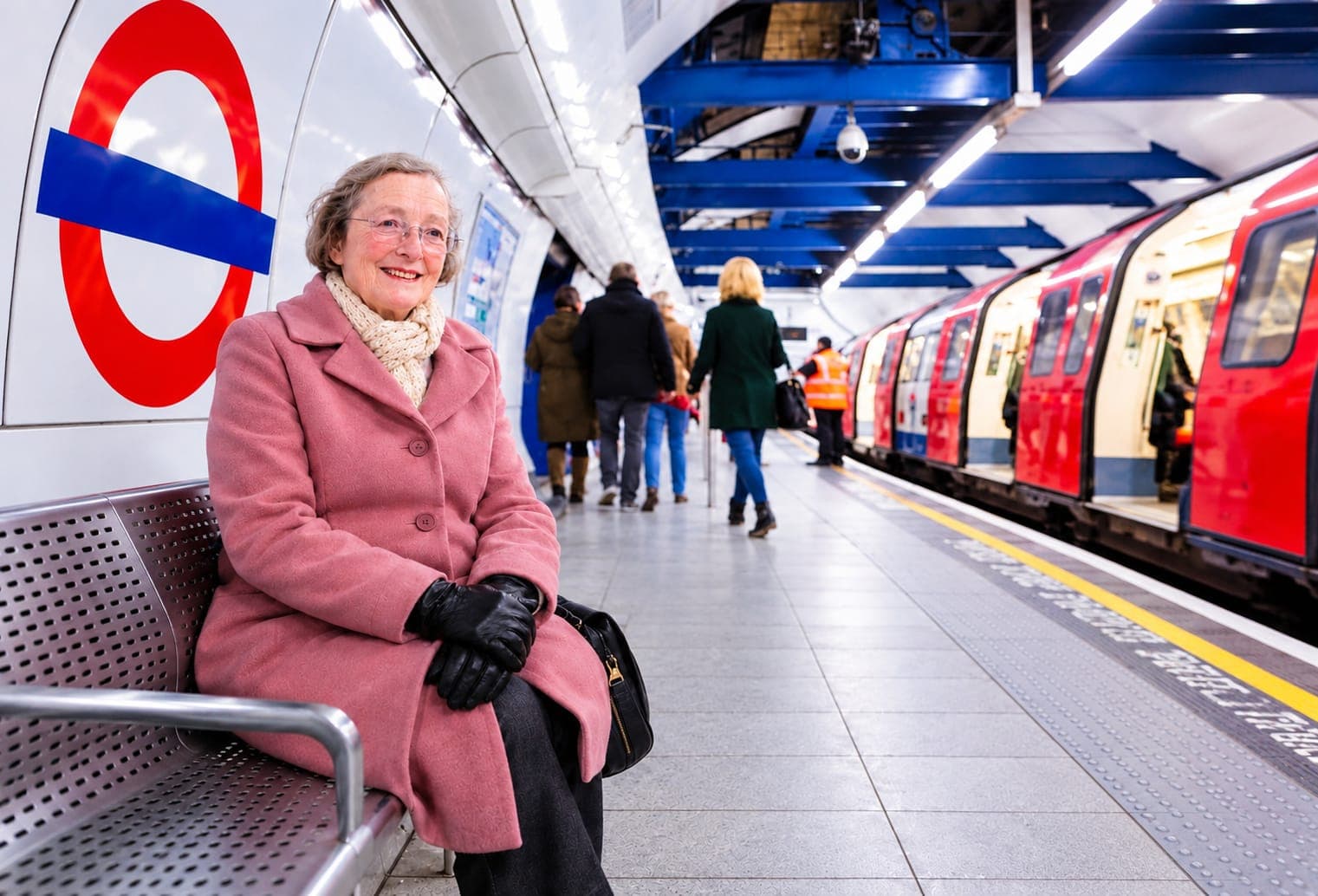
Public transport is extremely important for all of us. We use it to go to work or see family, keep up to date with our appointments and get around our cities. However, for the elderly using public transport such as trains, buses and metros can be a struggle.
The image above shows an elderly lady sitting in an underground station. This reminds us that we must create public transport that is easy to use and friendly for everyone. With busy cities and an ageing population this needs to be considered.
Why Public Transport is Important for the Elderly
For many elderly people, using public transport helps give them a sense of independence. They are able to easily get to hospitals, shops, community centres and social events.
Regular transport can help keep elderly people socially active. If they can travel comfortably they will find it easier to see friends and family.
According to the World Health Organisation, having easy access to transport is important for creating an age-friendly city.
Challenges Elderly People May Encounter
Whilst modern underground systems are efficient for transporting large numbers of people there are often issues for the elderly.
Common issues include:
Long distances between entrance and platform
Difficult stairs and escalators
Crowded platforms and trains
Not enough seats in waiting areas
Unclear signage and confusing directions
Difficulties getting on and off the train
This can cause stress throughout your journey. Especially for those who have difficulty moving around or lack confidence.
Simple Changes Can Help
Transport authorities can make stations more friendly by making changes to improve the experience for elderly people and many others.
Making sure:
There are lifts and no steps where possible
Priority seating that is comfortable
Clear and easy to read signage
Safer and easy to navigate platforms
Staff trained to help those who require extra assistance
Clean, well lit and easy to access waiting areas
Friendly gestures from fellow passengers can make using public transport more comfortable.
Creating Cities that Work for All Generations
Features within transport systems that are designed to support older generations can be highly beneficial for individuals with disabilities, parents with young children and those with heavy luggage. For example, by including features such as lifts, clear signage, priority seats and accessible platforms.
A 2026 study published in the Transport Reviews journal highlighted how ‘accessibility, affordability, availability, adaptability, acceptability and safety’ were key factors when looking at public transport usage amongst the elderly.
By supporting these needs, cities can help give more people an independent transport option.
Making People Feel Respected
Transport should make your journey not only comfortable but also make you feel safe, respected and welcomed.
Offering someone a seat, more time to board or help finding the right platform can really make a difference.
As we continue to see changes within our urban populations, public transport should also change. A truly modern transport system will make it easier for everyone to travel.




Comments
Sign in or create a free account to join the conversation.
Loading comments…