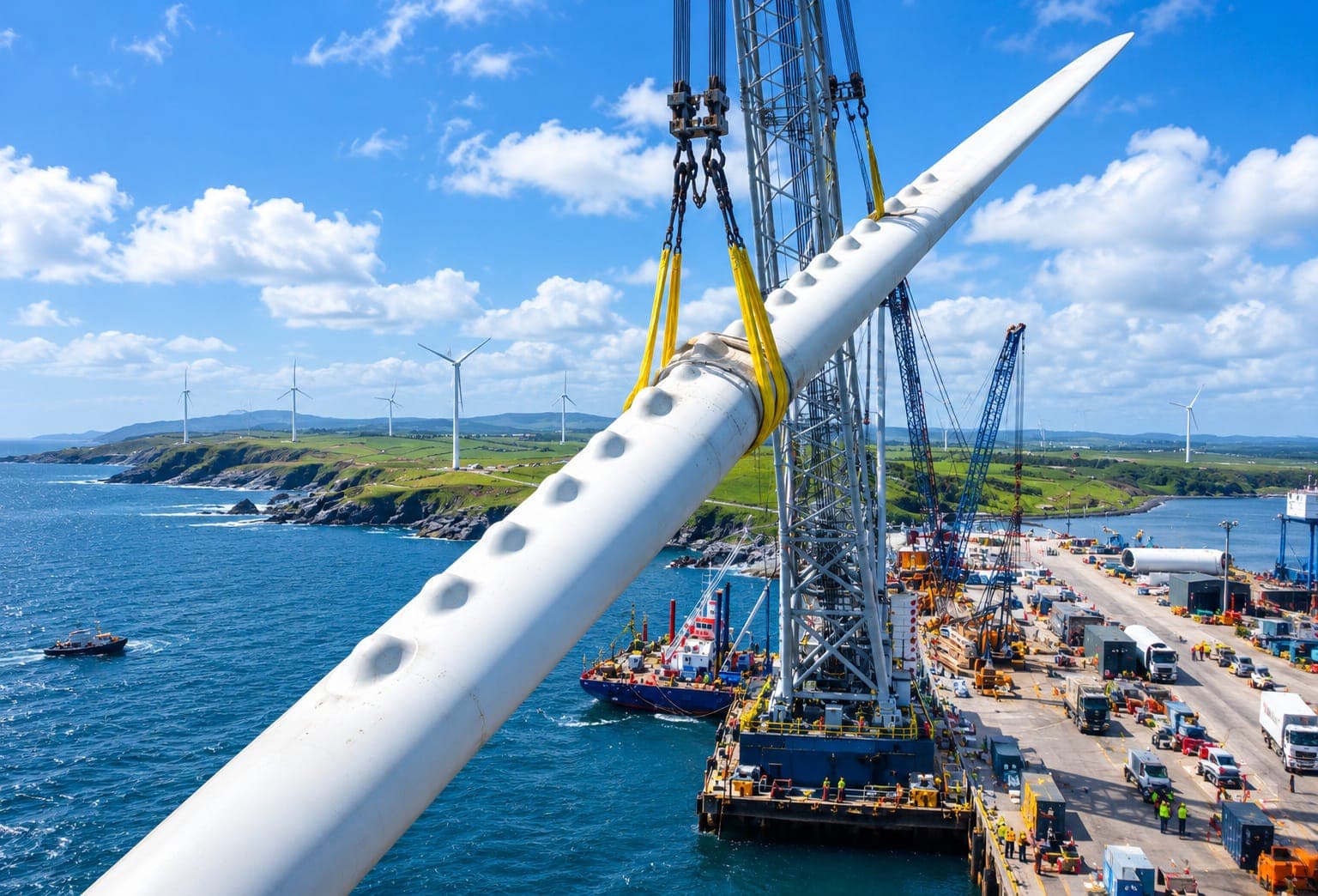
Wind turbine scientists are looking to the humpback whale for inspiration. This large sea creature has bumps on the front of their flippers that scientists are looking to use to improve wind turbine performance.
This is a good example of biomimicry, a practice where engineers look at biological structures and use them to create new technology. Scientists hope adding humpback whale related features to the turbine blades will control airflow and improve performance.
How Humpback Whale Fins Inspired Engineers
Humpback whales have rounded bumps called tubercles on the front of their pectorals fins. These bumps affect the flow of water over the fins and allow them to manoeuvre while swimming.
Scientists have been investigating if these sorts of features can be used to improve airflow over wind turbine blades. Rather than having a smooth front to turbine blades, they can have small bumps.
These bumps alter the airflow around the blade and can affect lift, drag and when the air separates from the blade.
30% Reduction in Drag
Reducing the drag on the blades is very important to create an efficient wind turbine. This helps with the forces on the blades.
Although there have been some discoveries in improving performance through nature inspired turbine designs, a reduction of around 30% may not always be achievable. This will depend on the blade design, wind speed, conditions and bump location/size.
Careful testing of the design must be done to see if there is any real improvements.
Effect on Airflow
The rounded shapes can help improve the airflow over the blade. If the conditions are right then the bumps can help to delay airflow separation.
As turbines can often be run outside of their ideal aerodynamic conditions, studies have shown that adding tubercles on the leading edge can help in some areas. However, there can be reductions in performance in some areas.
The idea is to find the best design to add bumps to the blade to improve performance.
Potential Impact on Renewable Energy
If further testing shows that there are real benefits of using whale inspired blade designs then engineers can create more efficient wind energy systems. By improving the aerodynamics of the blade, in the correct conditions more energy could be captured. This will help continue to develop renewable energy.
Nature Inspires New Technology
As an example of nature inspiring engineers, humpback whales have been studied. By using inspiration from birds in aircraft designs, to surfaces that replicate biological systems, scientists have been researching how to implement these natural techniques in human technology.
One exciting area of research for wind energy is looking at the unique tubercles on the whale’s fins. This will be further tested with experiments to see what use this can offer future wind turbines.

Comments
Sign in or create a free account to join the conversation.
Loading comments…